- 5 Tips for Hosting a Sensory-Friendly Worship Service Infographic
- Disability-Inclusive Event Checklist
- Ability Ministry
Episode Summary
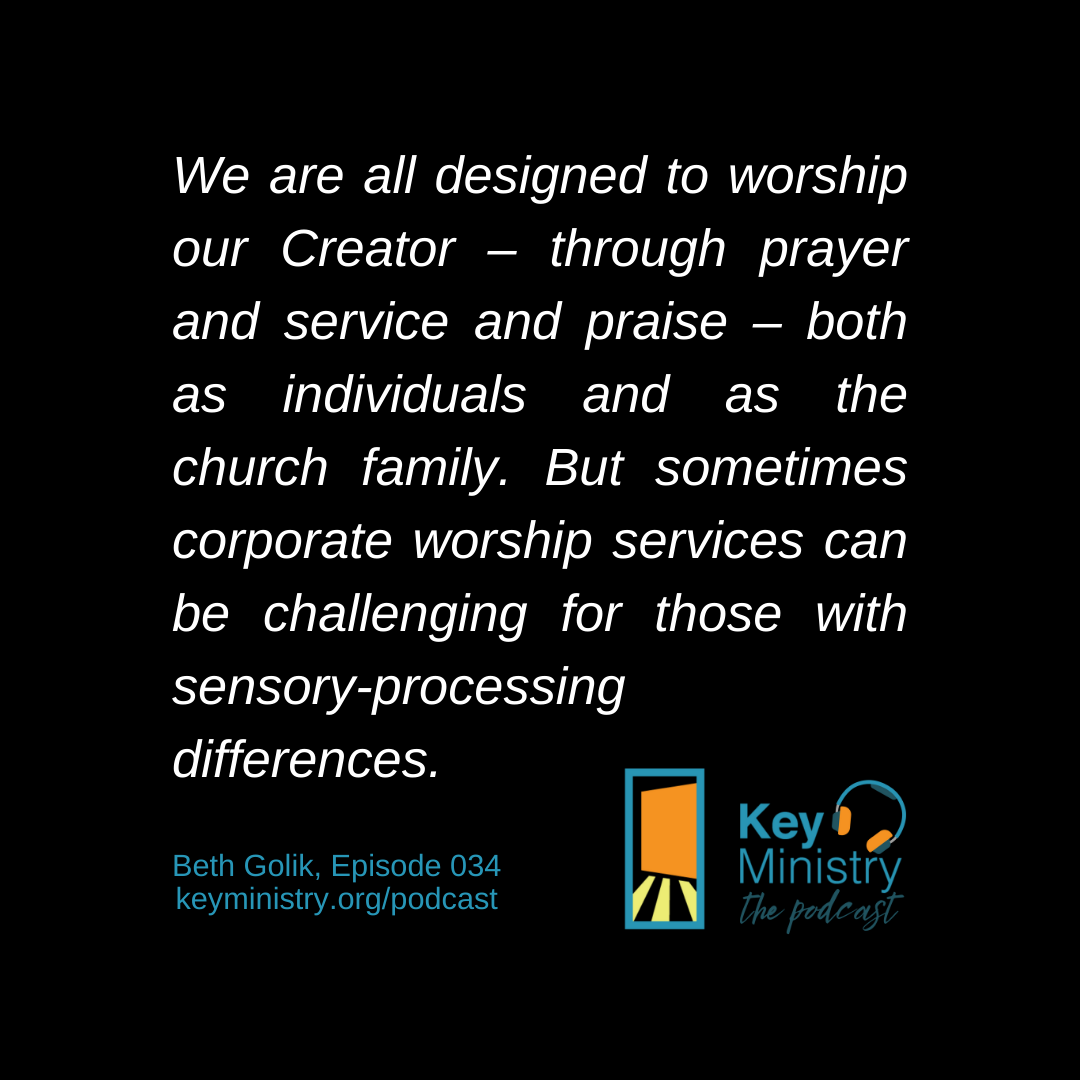
Corporate worship services can be challenging for people with sensory-processing differences. In this episode, Beth shares practical ways churches can reduce barriers and create a worship environment where more people can participate fully.
Five Tips for Hosting a Sensory-Friendly Worship Service
1. Adjust the lighting
Avoid strobe lighting, flashing lights, and extreme lighting changes. Warmer hues such as yellow, amber, and orange are often gentler than harsh blue tones. Keeping some house lights up can also help people safely navigate the room.
2. Keep sound levels moderate
Consider lowering the volume slightly, especially if your service includes a full band. Churches can also make headphones available for people who may experience sensory overload from noise.
3. Provide a schedule
An order of service can help reduce anxiety by letting people know what to expect. This could be printed, displayed on a screen, or shared online through a QR code.
4. Make the service interactive
Participation helps engage auditory, visual, and kinesthetic learners. Movement, motions, worship scarves, ASL signs, and concrete examples can all help people connect with worship and teaching.
5. Set the tone
The most important part is communicating that everyone is welcome. A sensory-friendly service should be a judgment-free space where movement, vocalizing, and different forms of worship participation are understood and welcomed.