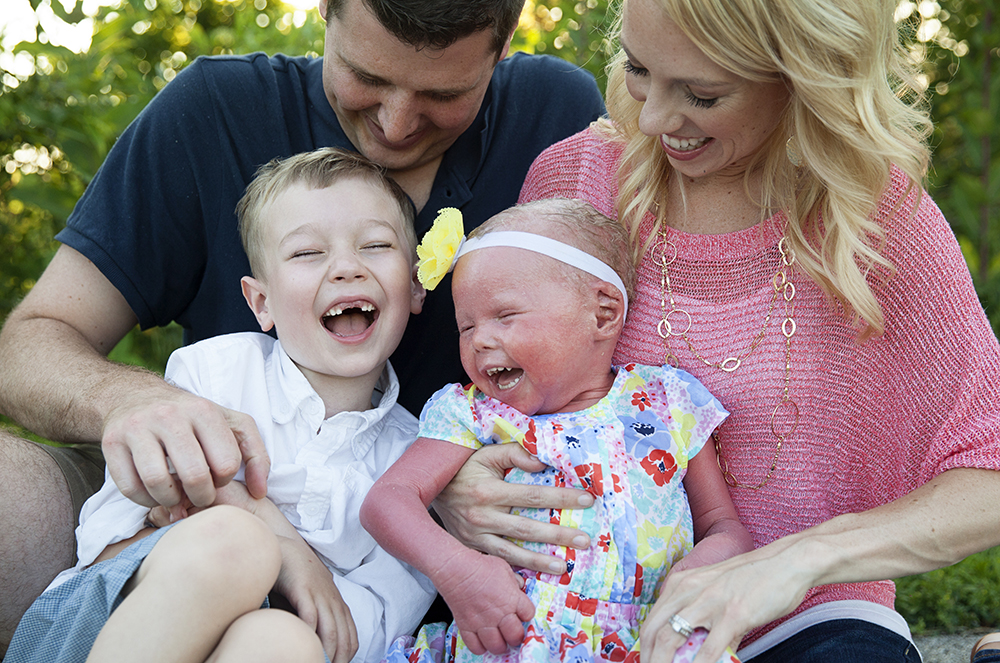
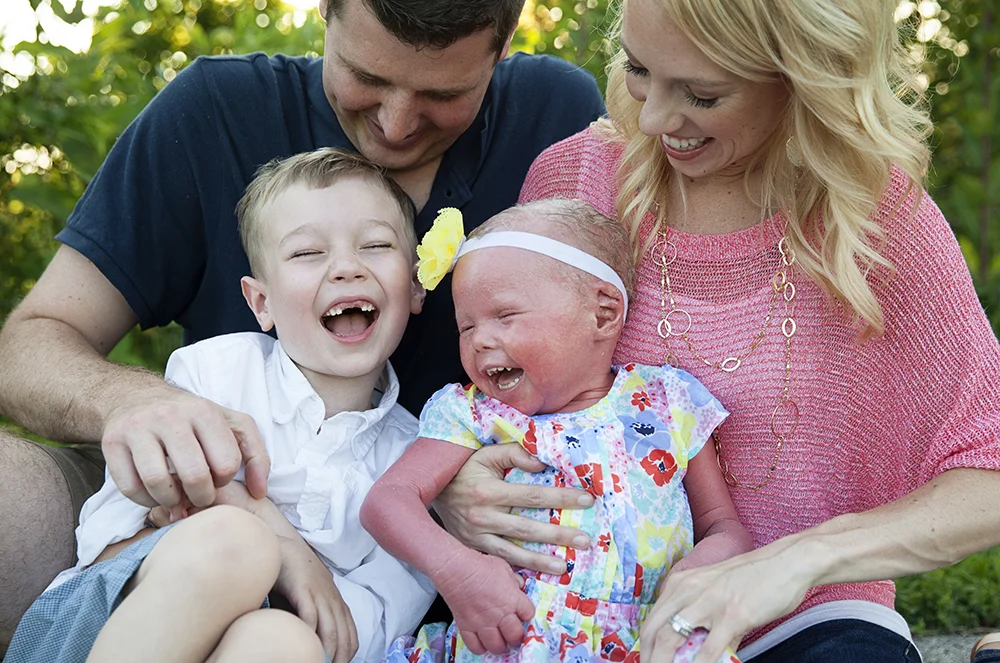
 Yet, even as she nears five years old, Brenna doesn’t really recognize these extreme differences in her skin and features as compared to other children, because she sees herself first and foremost as just another child. She views those around her with the perspective of connection, rather than distance—another little girl wearing a shirt with her beloved Minnie Mouse or another boy who is six years old just like her brother.
Brenna looks into the eyes of another child and sees someone “like me,” rather than looking at their skin and focusing on that difference. Our eyes are a huge part of the way we communicate—the way we show we are listening, the way we signal to others without speaking, even a way to display how we feel. Eye contact conveys a respect for the humanity of another. When you have a child with special needs or a physical difference, you come across eye contact of all kinds—from staring to glaring to absolute avoidance.
Stares can be upsetting … but perhaps avoiding is even worse. I’ve found that stares and questions give us the opportunity to educate, or at least the opportunity to meet that person. If someone is staring, I am able meet their eyes and smile. And more often than not, I find that in meeting someone’s eyes, they have a chance to realize my daughter’s humanity. That she is not just a “weird-looking kid”… she has a mother who loves her. And that sometimes is worth more than anything I could say.
But when people avert their eyes altogether, I recognize that embarrassment, that desire to escape interaction with my family, simply because my daughter looks different.
What I hope that we can all focus on as we teach our children to value our differences is that, when we are stripped to our basics, we are much more alike than we are different.
At the end of the day, our differences should make little difference in how we engage with each other, because our differences are not more important than our sameness. Our differences drive our uniqueness and our purpose, but our sameness is our humanity—we love the same and hurt the same.
As we strive to find appreciation for all of the pieces of our lives and our beliefs and our interests that set us apart from every single other person in the world, we need to also remember what we have in common: creation and love by the same God.
When we can look up, look into each other’s faces, I think what we can realize everywhere we turn is that the person across from us, despite any difference in appearance, ability or culture, is actually very much “like me.”
Courtney Westlake lives in Illinois with her husband Evan and two children, Connor and Brenna. After Brenna was born with a severe skin disorder, Courtney began chronicling family life and experiences raising a child with physical differences and special needs on her blog. Her writing has been published on sites such as the Huffington Post, Good Housekeeping, Woman’s Day and Yahoo Parenting. She is also the author of A Different Beautiful, which releases on August 1. You can follow her on Facebook and Instagram.