

Tourette Syndrome
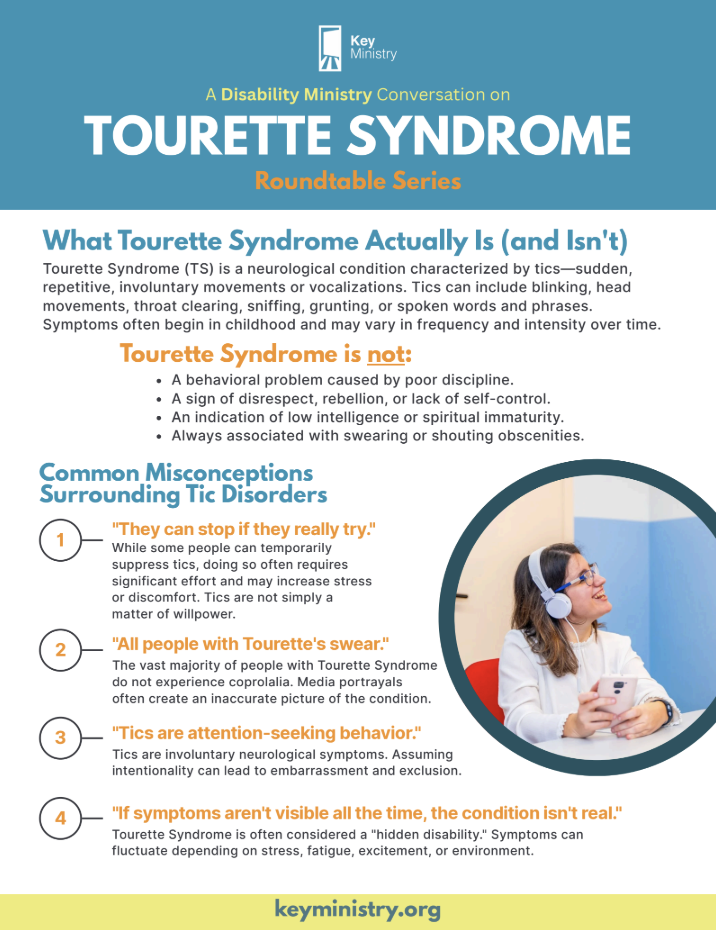
This month's conversation focused on a neurological condition that is often misunderstood—not only in our communities, but in our churches.
Tourette Syndrome is frequently mistaken for a behavioral issue, a discipline problem, or someone simply "seeking attention." In reality, Tourette Syndrome is a neurological condition involving involuntary motor and vocal tics.
As we discussed during the Roundtable, one of the greatest barriers families often face isn't Tourette Syndrome itself.
It's assumptions.
When church leaders understand what they're seeing, they can replace confusion with compassion and correction with curiosity.
To help continue the conversation, we've created a downloadable resource you can share with your staff, volunteers, and ministry leaders.
Inside you'll find:
• Common misconceptions surrounding Tourette Syndrome • Challenges individuals and families often experience in church environments • Five practical ways churches can foster belonging and inclusion • Simple questions leaders can ask to better support families • A helpful framework for responding with understanding rather than assumptions
One phrase from our conversation captures the heart of this resource:
Curiosity before correction.
Rather than asking, "Why are they being disruptive?" churches can begin asking, "How can we help this person participate successfully?"
Small shifts in understanding can make a profound difference for individuals and families who have often wondered whether they truly belong.
Thank you for your commitment to creating churches where individuals and families impacted by disability, mental health, and trauma are welcomed, discipled, and known.
This month's conversation focused on a neurological condition that is often misunderstood—not only in our communities, but in our churches.
Tourette Syndrome is frequently mistaken for a behavioral issue, a discipline problem, or someone simply "seeking attention." In reality, Tourette Syndrome is a neurological condition involving involuntary motor and vocal tics.
As we discussed during the Roundtable, one of the greatest barriers families often face isn't Tourette Syndrome itself.
It's assumptions.
When church leaders understand what they're seeing, they can replace confusion with compassion and correction with curiosity.
To help continue the conversation, we've created a downloadable resource you can share with your staff, volunteers, and ministry leaders.
Inside you'll find:
• Common misconceptions surrounding Tourette Syndrome • Challenges individuals and families often experience in church environments • Five practical ways churches can foster belonging and inclusion • Simple questions leaders can ask to better support families • A helpful framework for responding with understanding rather than assumptions
One phrase from our conversation captures the heart of this resource:
Curiosity before correction.
Rather than asking, "Why are they being disruptive?" churches can begin asking, "How can we help this person participate successfully?"
Small shifts in understanding can make a profound difference for individuals and families who have often wondered whether they truly belong.
Thank you for your commitment to creating churches where individuals and families impacted by disability, mental health, and trauma are welcomed, discipled, and known.