In this episode of
Key Ministry: The Podcast, host
Dr. Steve Grcevich welcomes
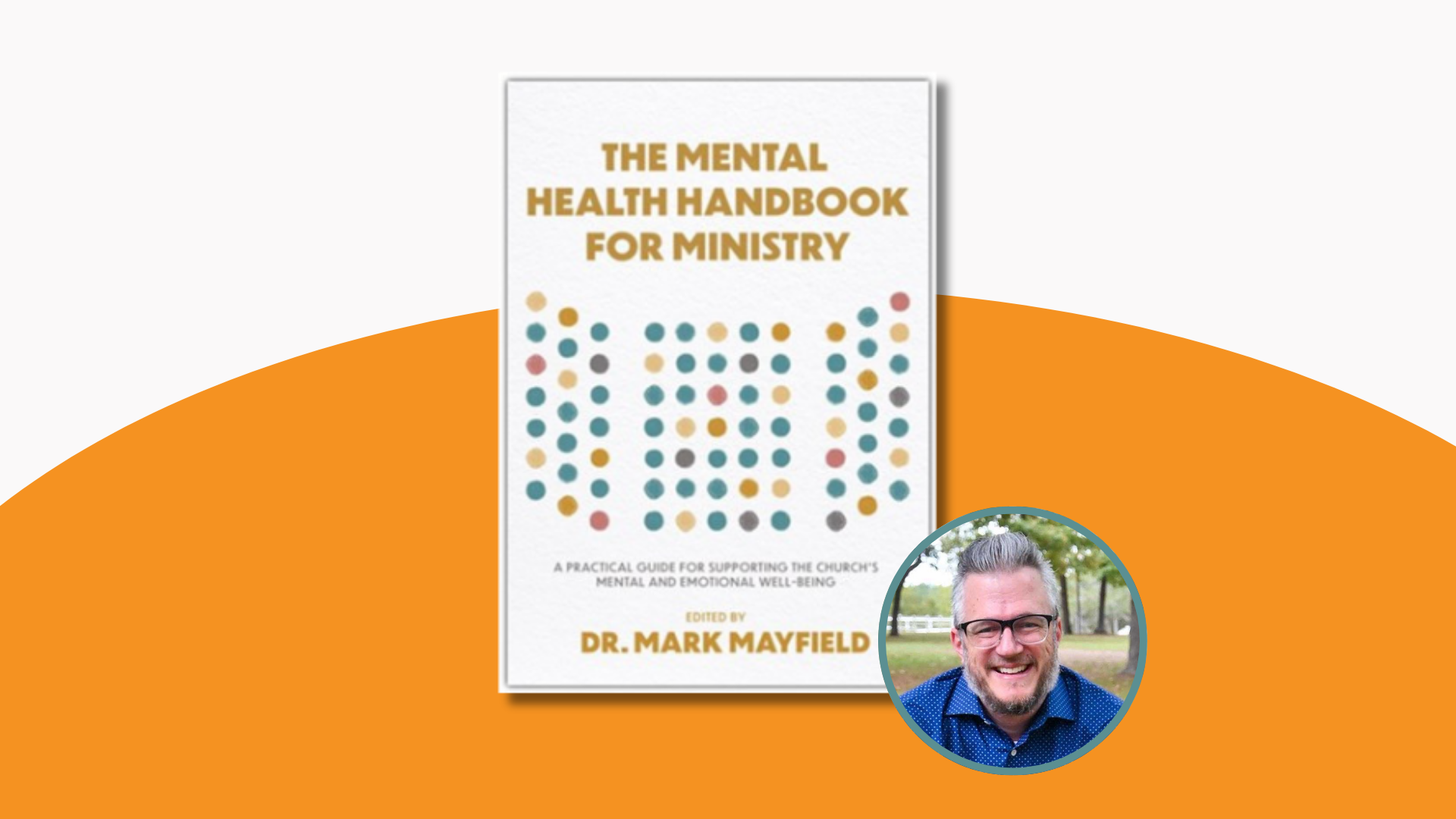
Dr. Mark Mayfield—pastor, counselor, professor, and author of
The Mental Health Handbook for Ministry. Together they explore how churches of every size can care well for individuals and families facing mental health challenges, develop a biblical theology of suffering, and build trusted pathways to professional support—all while holding fast to the hope of the gospel.
In This Episode
- Why The Mental Health Handbook for Ministry was written and how twenty-plus contributors shaped it as a trusted reference for church leaders.
- The biggest training gaps pastors face when caring for people with depression, anxiety, trauma, addiction, and questions around identity.
- How MentalHealthMadeSimple.life equips churches with faith-informed, evidence-based content beyond social media soundbites.
- What it looks like to minister to an “anxious generation” and address the loneliness crisis among teens and young adults.
- Practical first steps for churches of any size to start (or strengthen) mental health ministry without “checking the box.”
- How pastors can wisely vet mental health professionals, build referral lists, and offer ongoing wraparound spiritual care.
Key Quotes
“I rarely meet pastors who are malicious. Most are uninformed, misinformed, or underinformed—and that’s what causes problems.”
“The theology of suffering has to happen before a theology of care. Otherwise, we risk putting a bandage on an artery that’s bleeding.”
“Don’t ask someone how they’re doing unless you have fifteen minutes to actually listen.”
Why the Church Needs a Mental Health Handbook
Before he ever wrote his other books, Dr. Mark Mayfield had a vision for a resource that could sit on a pastor’s desk and answer one pressing question:
How do we faithfully care for people who are struggling with mental health while remaining rooted in Scripture? After years of publisher rejections, Baker Publishing finally said yes, recognizing the growing need in churches.
The Mental Health Handbook for Ministry is intentionally designed as a
reference guide, not a book
you read straight through. Each chapter addresses a specific topic—such as depression, anxiety, bipolar disorder, trauma, addiction, disordered eating, and more. For each issue, the contributors outline:
- A clear, clinical description of the condition.
- What Scripture says and how a biblical lens shapes our response.
- Where pastors and church leaders appropriately step in.
- When it is wise to refer to professional help.
Mayfield gathered contributions from around twenty-one faith-informed clinicians and professors so that church leaders could trust the handbook as a reliable, theologically thoughtful, and clinically sound resource.
One of the biggest gaps Mayfield sees in pastors is not a lack of compassion, but a lack of holistic understanding. Most seminaries and Bible colleges don’t thoroughly prepare leaders to recognize depression, anxiety, bipolar disorder, addictions, or struggles around sexuality and gender. The handbook seeks to fill those gaps so churches can respond with grace, clarity, and gospel hope.
Faith-Informed Resources: Mental Health Made Simple & More
Out of this desire to simplify complex conversations, Mayfield and his team launched
MentalHealthMadeSimple.life. It’s a growing hub for churches and ministries that want
faith-informed, evidence-based mental health content they can trust. Rather than relying on TikTok or Instagram trends, pastors can access:
- Webinars and trainings on core mental health topics.
- Articles, blogs, and practical tools for ministry contexts.
- The Mental Health Made Simple podcast, designed to clarify and “reality test” the claims people hear online.
At this stage, the focus is primarily on
churches and ministries, with affordable subscription pricing so that even smaller congregations can participate. The goal over time is to develop accessible options for individuals and families as well.
Mayfield also highlights several other trusted partners for churches wanting to go deeper:
- American Association of Christian Counselors (AACC), including their Mental Health Coach training and generous scholarships.
- Hope and Healing Institute (Dr. Matthew Stanford) and its coaching resources for serious and persistent mental illness.
- Christian Care Connect, AACC’s directory to help churches find Christian mental health providers in their area.
- Workbook series from AACC covering topics like anxiety, depression, grief, disordered eating, and loneliness—ideal for support groups or life groups.
- Books by Dr. Curt Thompson, such as The Soul of Shame, The Soul of Desire, and his recent work on grief.
Ministering to an Anxious and Lonely Generation
Building on Jonathan Haidt’s work in
The Anxious Generation, Mayfield reflects on the teens and young adults he’s worked with throughout his career. Many are deeply anxious, overstimulated by screens, and yet profoundly lonely. Behind the technology, they’re asking,
“Does anyone really see me? Does anyone really know me?”
Encouragingly, he notes that older Gen Z is beginning to move back toward church, hungry for truth, community, and something more solid than algorithm-driven content. Some are even trading smartphones for simpler devices to reclaim presence and relationships.
Mayfield argues that the
thread of loneliness runs through much of the mental health crisis, and the church is uniquely positioned to respond. Gospel-shaped community—where people are known, loved, and discipled—is one of the most powerful antidotes to isolation.
He also references
The Two-Parent Privilege by economist Melissa Kearney, raising the importance of family structure and discipleship in a child’s flourishing. While every family context is different, churches can support stronger family relationships and intergenerational connection as part of their mental health outreach.
Practically, youth and college ministries should be built around:
- Connection—students being seen, known, and valued by caring adults and peers.
- Community—life-on-life small groups, not just event-driven programming.
- Bible study and discipleship—rooting students in Scripture as they navigate complex questions.
In Mayfield’s own church, this simple approach has drawn hundreds of teens each week, reinforcing that young people are hungry for more than entertainment—they want real relationships and gospel-centered guidance.
Practical Steps for Churches of Any Size
When churches ask where to begin, Mayfield starts with a surprising first step:
leaders must ask, “Am I healthy?” Not perfectly healed this side of heaven, but
self-aware and actively pursuing health mentally, emotionally, and spiritually.
Without that authenticity, any mental health ministry risks feeling hollow. A church cannot credibly say,
“We care about mental health,” while its pastor quietly “dies on the vine” without support.
From there, he outlines several key moves for churches, whether they have 30 people or 3,000:
1. Develop a Theology of Suffering Before a Theology of Care
A biblical understanding of suffering must come
before building programs for care. Otherwise, churches risk offering spiritual “bandages”—“read a verse, pray more, you’ll be fine”—that unintentionally deepen shame and hurt.
Leaders should wrestle with how Scripture addresses suffering across the story of redemption—from Job, Elijah, and the prophets to the psalms, the life of Christ, and the epistles. This theological work shapes how a church responds when people are in deep pain.
2. Equip Key Leaders and Volunteers
Churches can start by identifying key people—staff, elders, small group leaders, youth volunteers—and giving them basic training such as:
- Mental Health First Aid—a half-day or full-day training on recognizing warning signs and responding safely.
- Mental Health Coach training through AACC or Hope and Healing Institute, providing deeper equipping (often 30–40 hours).
- Annual training for small group leaders on how to “hold space” for people who are struggling.
The goal isn’t to turn everyone into a therapist, but to ensure the church speaks a
common language about mental health and knows when to refer to professionals.
3. Build Thoughtful Referral Relationships
Instead of scrambling for names when a crisis hits, churches can proactively:
- Use tools like Christian Care Connect to find Christian providers in their area.
- Assign staff members to personally meet with pediatricians, primary care doctors, psychiatrists, counselors, and psychologists.
- Ask how those providers view faith, Scripture, and a biblical ethic, especially when worldview questions arise.
Importantly, referring someone to a counselor should never mean, “we’re done.” Pastors and leaders can attend first appointments, follow up regularly for spiritual care, and walk alongside people in an ongoing way.
4. Foster a Culture of Presence, Not Just Programs
Whether a church is rural and small or large and suburban, one of the most powerful ministry practices is simple:
Don’t ask, “How are you?” unless you’re willing to stay and listen.
Training greeters, volunteers, elders, and staff to slow down, listen for ten to fifteen minutes, and pray
in the moment can make a world of difference for someone battling loneliness, depression, or anxiety. People may not remember every sermon, but they will remember when someone truly saw and heard them.
For many churches, disability ministry, support groups for severe and persistent mental illness, or simple life groups built around honest sharing can become
gateways to the gospel for some of the most overlooked people in their communities.
Resources Mentioned
- The Mental Health Handbook for Ministry by Dr. Mark Mayfield (Baker Publishing).
- The Path Out of Loneliness: Finding and Fostering Connection to God, Ourselves, and One Another by Dr. Mark Mayfield.
- The Path to Wholeness: Managing Emotions, Finding Healing, and Becoming Our Best Selves by Dr. Mark Mayfield.
- Hope and Healing for Loneliness: A Guide to Flourishing Community by Dr. Mark Mayfield.
- MentalHealthMadeSimple.life — faith-informed, evidence-based mental health resources and the Mental Health Made Simple podcast.
- American Association of Christian Counselors (AACC) — Mental Health Coach training, workbooks, and Christian Care Connect directory.
- Christian Care Connect — AACC’s referral network for Christian mental health providers.
- Hope and Healing Institute (Dr. Matthew Stanford) — training and resources for mental health coaching and serious mental illness.
- Workbooks from AACC on anxiety, depression, grief, disordered eating, loneliness, and more (8-week, group-friendly formats).
- Books by Dr. Curt Thompson — including The Soul of Shame, The Soul of Desire, and his recent book on grief.
- The Anxious Generation by Jonathan Haidt.
- The Two-Parent Privilege by Melissa Kearney.
- Mental Health First Aid — training for recognizing and responding to mental health crises.
- Mental health coach programs through AACC and Hope and Healing Institute.
- Key Ministry resources for disability and mental health inclusion, outreach, and support.
About the Host & Guest
About Dr. Steve Grcevich
Dr. Steve Grcevich is the President and Founder of
Key Ministry and host of
Key Ministry: The Podcast. He is a retired child and adolescent psychiatrist who has spent decades at the intersection of clinical mental health and local church ministry. Through conferences, resources, and training, Steve and the Key Ministry team equip churches to welcome and disciple individuals and families impacted by disability, mental illness, and trauma for the purpose of making disciples of Jesus Christ.
About Dr. Mark Mayfield
Dr. Mark Mayfield is a former pastor, award-winning author, speaker, certified master Christian coach, and
licensed mental health counselor. He serves as an assistant professor of Clinical Mental Health Counseling at
Colorado Christian University and has extensive experience consulting with schools and faith-based organizations on emotional and mental wellness. Mark founded
No Student Unseen, which helps schools navigate mental health challenges using a “stoplight alert” system for emotional wellness. He partners with the
American Association of Christian Counselors as Director of Practice and Ministry Development and serves as editor of
Marriage and Family: A Christian Journal. Mark is the author of multiple books, including
Help! My Teen Is Self-Injuring,
The Path Out of Loneliness,
The Path to Wholeness,
Hope and Healing for Loneliness, and
The Mental Health Handbook for Ministry.
Episode Transcript (click to expand)
Well, hello. This is Doctor Steve Grcevich. I am the president and founder of Key Ministry, and I am delighted to welcome all of you to this week's episode of Key Ministry, the podcast.
Over the last few months, I've had the privilege of interviewing a number of important people doing great work when it comes to mental health ministry and outreach. And building upon that today, I'm especially honored to have the opportunity to talk to Doctor Mark Mayfield.
Mark is a former pastor, award-winning author, speaker, certified master Christian coach, mental health counselor, and assistant professor of clinical mental health counseling at Colorado Christian University. He has extensive experience in mental and emotional health consulting with schools and faith-based organizations.
He founded No Student Unseen, which helps schools navigate their mental health challenges with the stoplight alert for mental and emotional wellness system. Clinically, Doctor Mayfield is an expert in working with families impacted by trauma.
He partners with the American Association of Christian Counselors as the director of practice and ministry development, and serves as editor of Marriage and Family, a Christian journal.
Doctor Mayfield, in addition to all of that other work, is the author of five books that include Help! My Teen Is Self-Injuring: A Crisis Manual for Parents, which addresses his own suicide survival story and provides practical tools to help your child who may be struggling; The Path Out of Loneliness: Finding and Fostering Connection to God, Ourselves, and One Another; The Path to Wholeness: Managing Emotions, Finding Healing, and Becoming Our Best Selves; and Hope and Healing for Loneliness: A Guide to Flourishing Community. And most recently, he authored The Mental Health Handbook for Ministry, that was published within the last few weeks.
Doctor Mayfield's been featured in prominent media outlets, including WORLD Magazine, The Christian Post, Fox News, Women’s Day, NBC TV, and more. Doctor Mayfield and myself were on a list of mental health professionals invited to the White House in December 2019, and he's had periodic calls with the White House to discuss mental health in America.
Mark, thanks so much for taking the time out to join us today. So thank you for being here.
My pleasure, Steve. It's always great to see you and just love what your ministries are doing and all about. So it's fun just to have these conversations.
So what prompted you to write the newest book, The Mental Health Handbook for Ministry? Yeah, and who do you see as the intended audience for this?
Yeah. That's a great question. It's interesting. It's been a labor of love. I mean, it's been a—actually, I had that idea before I wrote my first book, and it had been something that I had desired to see just from my own experience as a pastor in the church and then also seeing a lot of my caseload when I was running my counseling center were pastors and leaders in the church.
And just, you know, in some ways also those that were harmed by the church in unintentional ways or intentional ways. And so I had this idea, you know, probably about ten years ago. And I built this idea out, got some interest from some places, and then when, you know, push came to shove: “No, I don't think it'll sell. I don't think it'll be good. No, no…” You know? So, like, six or seven publisher denials.
And finally, about a year and a half ago, Baker Publishing said, “Hey, we like this idea. I think this is a good idea. I think there's some traction to it. It's needed. Timing is right in a lot of ways.” And so they said yes.
And I never wanted it to be a book that was filled with my ideas. I helped obviously guide the outline and the context, but I wanted to have multiple voices to go, “Hey, listen, it's not just me.” There's, you know—I think there's twenty or twenty-one individuals that have contributed on the book to say, “Listen, this is a reliable source from people that are either teaching in the field, practicing in the field, or both.”
And so it's something that the church can trust because it's coming from faith-informed clinical practitioners and professors that they can then implement into their ministries. And so it's written for, I think, anybody that has any kind of leadership role in the church—so whether that be a small group leader, volunteer, to a paid lead senior pastor.
And again, you said that this is more of a—it’s intended to be more of like a reference guide as opposed to something that one would read through from beginning to end. And so what do you see as sort of the biggest knowledge or training gaps among pastors when it comes to caring for and supporting individuals and families who are impacted by mental health issues? And how did you seek to address that through the book?
Sure. I think it's just a holistic understanding. Right? I very, very rarely met maliciously intending pastors. Right? I mean, it happens, but it's very rare. A lot of times it's just uninformed or misinformed or under-informed that causes issues.
And so I think that some of the training gap is just going, “Okay, a healthy understanding of: what are some of these things? What is depression? What is anxiety? What is bipolar? What does it mean to have an addiction? What does it mean to have a disordered eating struggle? What does it mean to wrestle with gender or sexual identity? What is…?” You know, so just a lot of really formational and foundational things that I think seminaries or Bible schools don't prepare them for.
And instead of having them go back and get a counseling degree, we’re like, “You know what? What if we were able to create some context and say, ‘Here's what it is clinically. Here's what the Bible says as best as we can ascertain. And then here's where you can step in, and here's where you probably need to refer and find somebody that you trust.’”
So in addition to this book, I mean, there's another resource that you've created, mentalhealthmadesimple for churches. You know, can you talk a little bit about that, and how does that resource complement or build upon what you've shared in the book?
Yeah. So mentalhealthmadesimple.life is the website that we've launched. We had a desire to launch it a long time ago, but we felt like it was gonna be a good addendum to the book. And so it's really a place that, if churches wanna sign up and engage, they’re getting consistent information that is faith-informed and evidence-based, I think is really important.
I am sure you are just as frustrated as I am at times where we get people that get their mental health information from TikTok or from Instagram or Facebook. And, you know, I don't want to discourage any influencer, but one of my encouragements is this: if this is your story, just tell it as your story. Don't tell it as a hard-and-fast, like, “This will work for everybody—five steps to this or three steps to that or here's what I did so it could work for you too.”
I think that creates a lot more disillusionment when it comes to the mental health conversation. What we need to go is, “That's a great story. I'm encouraged by that person's story. Maybe there is hope for me too. Let me figure out what works best for me.”
And so that's what kind of mentalhealthmadesimple.life is: a place to come back to and go, “Okay, let's reality-test this. Everybody who has ADHD has these five symptoms.” Like, no. It's not that simple. “Let's talk about it here.” Or, “Medication's bad.” Well, no. Let's talk about it here. Or, “Medication is the only way. You don't need therapy.” Well, no. Let's talk about it here.
And so the whole idea as we're growing it is just a trusted place where people's voices—we can simplify things. We don't make it so complicated. I don't know why we make it so complicated, but we do. And we do in the church and we also do in kind of the clinical realm as well.
I mean, so I know that you have a program available where churches can subscribe for, like, a modest amount every month and get access to this information. Is that a church-only resource, or is that something that individuals or families would sign up for too?
Yeah. The goal is one day to have kind of something even simpler, you know, something like $9.95 a month or something really inexpensive where individuals can sign up. Right now, we've really kind of narrowed our focus—and you know this with Key Ministry and stuff: you can be all things to all people and miss the mark, or kind of narrow it in.
And right now, we're just narrowing it down to churches and ministries, big or small. We want to make the price point a place where it's not gonna be overwhelming. Right now, I think you can sign up for $49.99 a month, and that stays the way it is the rest of the time you're with us. I think a “normal” amount would be like $99.99, but it's access to webinars, trainings, content—published or otherwise—blogs.
We've got our podcast at mentalhealthmadesimple.life, the Mental Health Made Simple podcast that we’ve launched—about nine episodes ago—and just kind of plugging along, seeing how we can support people. You know, the idea is, yeah, be all-encompassing one day. But right now, we're really focused in on the church.
So what are you finding, now that with the whole Mental Health Made Simple, what kinds of content are pastors and church leaders most looking for?
It's interesting to me because I think you and I are so steeped in the field and have been for so many years that we think these are the things that we need to be talking about, and then we get to the people and I'm like, “Oh. This is the stuff that you wanna talk about.”
And it's really the basic stuff—having conversations around, “How do I develop a theology of care and suffering in my church, and how do I do that well? How do I create space for families that are dealing with severe and persistent mental health or pervasive depression or anxiety or bipolar? What do I do when my kid is wrestling with their gender identity and we hold a biblical ethic around this?”
You know, it's not the complex things, maybe, that we think sometimes. It's just: how do I engage this in a way that's going to listen empathically, but also maintain a biblical ethic that holds them to the truth of Scripture without beating them over the head with a Bible or a fish in a way that's gonna create more damage?
And that's—I think they get, a lot of times, and I'm sure you’ve seen this in the disability ministry space—they get paralyzed, and then they don't do anything.
That actually brings up a great point. If we wanna get churches engaged in doing mental health ministry—be it care and support of folks who are already in the church, or what's more our focus, evangelism and outreach to people who find themselves outside of the church because their mental struggles are a barrier—what advice would you have for pastors or church leaders on where to start? What are the first two or three things that a church ought to do if it wants to meaningfully care for and support people inside their church and people in the community they serve who have mental health struggles?
Oh, Steve, I'm gonna make a preface. If you're listening to this right now and you're a pastor and leader, please don't turn it off after I say what I'm gonna say. Like, can you hang tight with us through the end here?
I think the first step that any leader—pastor, elder, deacon, whoever is kind of championing this conversation in their church—the first thing they need to do is ask themselves, “Am I healthy? Am I healthy mentally, emotionally, and spiritually?”
And they might say, “Well, does that mean healed?” I'm like, no. That means aware of your stuff. It means that you're taking active steps to find health, maintain health. I don't expect—and this side of heaven, there's not going to be any 100% healing. Right?
I tell my students this all the time. I call it “a Christian…” Like, a good counselor is just aware of their stuff, and they're doing something to improve themselves. Well, same thing with a pastor. I think a healthy pastor is going, “Yeah, I struggle in these areas. Maybe I'm dealing with anger or pride or lust or depression or anxiety or whatever.”
And I think the first thing that any church needs to do is just take an evaluative stance of going, “How do we care for our own first, and how are we encouraging them just to maintain health?” Because if you don't, anything that you do is going to be inauthentic. Any ministry that you try to start is going to be inauthentic.
“Yeah, we love mental health ministry, and here's our pastor that's dying on the vine over here because he's not getting the support he needs.” Well, nobody's gonna believe that you are all for mental health. So I think that's the first thing.
And I know you've got resources at Key Ministry. I know the organizations that we all kind of collaborate with and partner with have great resources. The American Association of Christian Counselors, you've got Matt Stanford’s stuff in the mental health coaching arena. There's just a lot of great resources out there if you kinda don't know where to begin.
And in The Mental Health Handbook for Ministry, at the end of each chapter we provide extra resources that you can go read and search when it comes to those kinds of conversations.
So that's number one. Number two, I think, is really at the leadership level: have you guys ever engaged in a conversation around the theology of suffering? What is the theology of suffering? What is it biblically?
You know, a lot of times it's just showing up in the struggle and being a presence, but we don't ever kind of formalize that or converse about that. Because the theology of suffering has to happen before a theology of care. A lot of times the theology of care is like, “Just put a band-aid on it. The artery is bleeding out, but let's throw a band-aid. They'll be fine. Go read a Bible verse. Go pray more.”
And that's—Bible is sufficient, I believe, and prayer is powerful, and those are tools too that are foundational. But if you don't have a really good theology of suffering, you're going to unintentionally create more damage.
And then I think: take stock of, “Okay, who are key people in our organization that need to be equipped?” Right? And so there's a bunch of really good mental health coaching programs, mental health first aid programs—things like that where everybody kind of gets on the same page when it comes to language, lingo.
Does the church have a good policy and procedure manual when it comes to mandatory reporting? Those types of things, I think, need to be laid out. And then just start.
I think once you do all that and kinda take a survey of that, then begin to go, “Okay, let's take a step of faith,” and then constantly evaluate and have people speaking into it. But it's not just a one-and-done checklist. I think a lot of churches—I'm sure you've seen this too—a lot of churches just go, “Oh, I did that. Check the box.”
“Well, no. That doesn't fix the solution. Yeah, I've got a disability ministry. Check. And it's back in the corner behind the basement on the 3rd floor, and nobody knows that it's there, and we don't talk about it, and we don't invite people in.”
So I think it's that—it's engaging that culturally in their churches.
Do you have a favorite resource or two that pastors could share with their team if a staff wanted to get educated together around theology of suffering?
Yeah. I mean, obviously, we're gonna talk about it quite a bit at Mental Health Made Simple. I think Kurt Thompson does a good job of talking about it in some of his writings—The Soul of Shame, The Soul of Desire, The Deepest Place (his new one on grief) is really good.
I know that you guys have some good resources in that in your kind of well of engagement and partnerships. Matt Stanford—what's his organization called? Hope and Healing Institute. Hope and Healing Institute has some good stuff. AACC’s got some good stuff.
But I think you've gotta wrestle through it. How well do you know Scripture? You can find a theology of suffering sprinkled throughout God’s dealings with Nehemiah and Gideon and Elijah and Job and David, Daniel, the minor prophets, the major prophets, and then into the epistles. So digging into God’s Word too is really going to be important.
So shifting gears for a moment, one of the things that I've personally seen a lot of interest in and am regularly getting asked to talk about these days at churches—either as something that internally they're doing for their own people or externally as an outreach—is the whole theme of Jonathan Haidt’s work around “the anxious generation.”
Since you started off working with teenagers, what thoughts do you have on how the church can most effectively minister and respond to the folks that he's described as representing or composing “the anxious generation”?
Yeah. I love that question. I think it's creating opportunities for intentionality and side-by-side process. At least these kids wanna be seen. They wanna be known behind their screens, apart from their screens.
I think we see this in the Gen Z population—Barna talks about this recently—that it's the biggest migration back to church in the older Gen Z. They're wanting truth, wanting community, wanting engagement. They're kind of ditching the smartphone for dumb phones. I mean, there's, I think, a pendulum shift happening.
But I think we have to understand that loneliness is kind of the pervasive thread throughout, and it’s a disconnection. We think we're connected, but we're disconnected. And I think what I tell people all the time is: if we wanna change the stats, we have to change how we engage the family.
And I think a two-parent household is really important. I'm actually reading right now Melissa Kearney's book The Two-Parent Privilege. It's an interesting book. She's an economist, and so it ruffled some feathers in a lot of ways. But I think that's—just how we engage discipleship and community is really important.
And I think when we do that and we tackle the loneliness crisis, I think the mental health stats are gonna adjust. But I think the church is primed, to be honest. I think the church is primed and ready to be a key catalyst in that change.
So related to that, I know one of the other things that you do for a living is that you get asked to consult with or work with Christian schools. I'm curious: what are you seeing as you consult around the country? And are there examples you can think of of Christian schools that are doing good work and innovating and responding effectively to this mental health crisis that we're observing in this generation?
You know, I don't mean to be a Debbie Downer in this question. I think that's some of the problem: that there's not a comprehensive understanding of how to integrate this throughout.
You know, there's a lot of Christian schools that I've worked with that think that “social-emotional learning” is a woke term. And in some ways, it's been hijacked by the left. But to create emotional intelligence in our kids, to talk about mental health—then there's also the conversation, “Well, mental health has become in vogue. If I don't have a diagnosis, then somehow I'm missing things.”
I think it's just kids wanting to be seen, known, valued, and loved, and they're trying to attach themselves to certain things. So I have seen schools try to do good things in the sense of creating parent talks and creating opportunities for conversation and engagement, but it almost feels rote in the sense of just checking boxes—not stepping back from a board level or from an educational level and going, “What are we doing to really provide opportunities for effective equipping of our people?
And do we have not just school counselors, which I think are shifting, but more LPCs that are able to sit and walk with our students in those ways?” So I think there's a desire. I just think, in some ways, just like I talked about at the beginning, there's almost a paralysis: “I don't know where to begin. It's so overwhelming.”
And then when they get in there and check the box—“Oh, look, I've done what we needed to do”—but it’s not impacted culture. It's not shifted different things. So I think there's a lot of room for improvement and growth in that.
And just like anything, it's been really hard. And I know that you know this very well in your years of doing this with the disability side of things: it's really hard to convince people and break through that barrier of “Oh, we probably should do this.”
Well, it's interesting around here—maybe this is an Ohio thing or it's a Midwest thing—but there are a couple of things that seem to be driving change over the last two or three years. One is, in our state, the radical expansion of school choice options.
And now that the money follows the kid, and when you have kids who are on IEPs or kids who need accommodations because of mental health issues, with the Christian schools looking at that as a source of support, there's been some interest on that end.
The other interesting twist to this around here is that, despite the fact that socially we're a very conservative state, because of our large pediatric hospitals, Ohio was a hub of a lot of the gender medicine stuff. And word has gotten out among families that we know that kids who've experienced trauma, kids who have an autism spectrum disorder, kids with a variety of different mental health conditions appear to be a lot more vulnerable to this stuff.
And there are more Christian parents seeing and experiencing things in the public schools who are wanting their kids or needing their kids to have a faith-based education because of the cultural influences that are getting communicated there.
Right. Agreed. And I think that's where we're gonna see the change and the shift: parent conversations and parent needs. You and I can get on the megaphone all we want, but until parents start pushing some of these things, I think that's where it's gonna really shift.
So one of the challenges with a lot of our ministry focus being on inclusion of kids and families is that, when we think about mental health ministry, so much of this is centered around churches offering peer counselors, some sort of ministry of presence with people who are trained helpers.
What does that look like for middle school students, high school students, college-age students who are wrestling with all of this? Any thoughts about what the church's response needs to be?
Yeah. I think at that level of ministry, whether it be volunteers or paid staff, they need to be mental-health-first-aid trained and then maybe mental-health-coach trained, just to recognize signs. Early intervention, we know, is really important—just noticing signs.
But I also really love about our church that youth ministry is not about entertainment. It's about connection, community, and Bible study. And it's been wildly successful. We have a church of maybe 1,200, and we have about two to three hundred kids on a weekly basis coming to Wednesday night small groups and then Sunday morning service because they're craving that connection apart from their screens, apart from the busyness of that kind of stuff.
So I think that's a big deal. But I think just feeling equipped—mental health first aid is, I think, a half-day to full-day training that you can bring somebody in and get your volunteers and team trained.
And then the mental health coach training, either through Hope and Healing Institute or through AACC, is a little bit longer. It's kind of at your own pace—I think thirty, forty hours is what it is—but it's still important to all be on the same page, speaking the same language.
Yeah. And AACC, they have some very generous scholarships, I think, that help support all of that.
So coming back for a minute to the loneliness thing: when we put together our model for churches looking at a mental health outreach and inclusion strategy, one of the key barriers to church attendance is the social isolation that families oftentimes experience when someone in the family has a mental illness.
What can the church be doing to connect with and be intentional in reaching and welcoming lonely people in the communities they serve?
Yeah. I mean, it's complex and yet simple at the same time. I think it's making people aware of how those families feel, whether it be out of objective truth or subjective truth—it doesn't matter. It's: how are they feeling in society, and how are they feeling when they walk into a church, and why might it be a really courageous thing for them to walk into a church?
Something as simple as this: don't ask somebody how they're doing unless you've got fifteen minutes to sit and actually listen. Something as simple as that. Training your leaders and your foyer people and your volunteers and your deacons and your elders and your staff: if you're gonna ask somebody how they're doing and they are in this category, sit. Linger.
Like, “No, really—how are you doing?” And sometimes the simplest thing you can do is just create a place for them to share their story. You might think, “Well, I've gotta get them connected.” Yeah, it might be good to get them connected to a ministry. But in that moment, the most important thing is to go, “I see you. You are human. You are struggling. I want to pray with you.”
Don't say “I'll be praying for you,” either. Sit with them in that moment. Listen to their story—ten, fifteen minutes—and then pray with them in that moment.
That’s gonna get people to come back.
Whether you’ve got a ministry form right now or not, that personal connection, that personal touch matters. And so, obviously, if you’re a smaller church, or you as a lead pastor are like, “I can’t do that for all my people,” okay—then train those around you to do that.
I think that’s a big deal right now. And then, obviously, vision planning, strategic planning, kind of taking a step back and going, “Okay, we can’t be all things to all people, but are there ways that we can create some ministry avenues for these families to feel cared for?”
That’s why I love what you guys do at Key Ministry. Disability ministry is a gateway to really bringing people in and caring for people in those spaces, because they’re the most overlooked populations in a lot of ways.
You might go, “Well, I can’t do a depression support group and an anxiety support group.” That’s fine. That should be normal youth ministry, normal small group ministry, where we’re taking care of each other. But I think the disability ministry piece, or even a support group for people who have severe and persistent mental illness, is an important thing.
You can get a lot of information at Hope and Healing Institute through Matt Stanford’s stuff. But I think those two ministries are really key. And then, equipping your small group leaders—maybe yearly in a training—around how to hold space for people that are struggling in home groups or life groups or small groups is really important.
So, with all the resources that you yourself provide, can you talk a little bit about your role with the American Association of Christian Counselors? We touched on the fact that they have a phenomenal program to train mental health coaches. Are there other things that you’ve created or other resources that they have that pastors, church leaders, and families listening to this would be interested in?
Yeah, I love our workbook series. We have two different workbook series. One is my loneliness workbook, but there are different ones on anxiety, depression, grief, disordered eating.
I like those because they’re bite-sized, chapter-by-chapter, tangible, journal-type workbooks that you can fill out. But you can also use them as curriculum for a support group. You could use them—like the loneliness book—for an actual life group.
Those are some tangible resources. I think each book is eight chapters, so eight weeks. That could be a great way to train your leader, make sure your leader is equipped for that. But it’s a great tool and a great resource. I think we’ve got 16 or 18 workbooks total that they can go and take a look at.
Coming back for a minute to the Mental Health Handbook for Ministry: when I was reading through a lot of the topical chapters that deal with things like depression, anxiety, trauma, there’s a section in each of the chapters that outlines the indications for when you, as a pastor or staff member at a church, should be looking to refer the folks you’re caring for to professional help.
What do you see, or what role should churches assume in vetting mental health professionals in the communities that they serve? Especially over the last five years, given the radical decrease reported in surveys in terms of trust in the medical and mental health community, what does the role of the church look like in terms of evaluating, scoping out, and pointing to professional resources?
Well, there’s a great resource called Christian Care Connect that AACC has. It’s a faith-based alternative to some of the other clearinghouses out there, and we’re growing that. If you wanted to look for a Christian provider in your area, you could go to CCC—Christian Care Connect.
But I always tell pastors, part of this whole conversation around theology of suffering and theology of care is asking, “What are you doing, or what have you tasked your staff with doing?” Maybe you assign a task:
“This person on staff—I want you to go find the pediatricians and interview them. This person needs to go find the primary care doctors. This person needs to go find a psychiatrist. This person needs to go find couple counselors. And go and interview them. We want to put you on a referral list. We want to understand how you’re going to take care of our people.”
If I can’t find a Christian counselor or a Christian psychiatrist or a Christian psychologist or doctor, then I’m going to be very open in my questioning: “Hey, we’re sending people who have a biblical ethic and see things through a Christian lens. How are you going to walk alongside them in this?”
Asking those questions and vetting those people is really important. Do that proactively and preemptively, not reactively, because that’s when it can get a little bit messy.
I also tell pastors all the time: don’t feel like it’s “checking a box.” “I saw them for two meetings and then handed them off to a therapist.” They need that continued wraparound support.
I’ve encouraged a lot of pastors to consider what it would look like to go with them to their first session—whether it’s psychiatry, psychology, or counseling—and then say, “I’d still like to see you on a regular basis, maybe once a month or every two weeks, just to see how you’re doing and talk about your spiritual development and growth and what you’re learning.”
We don’t just hand them off. It needs to be a broader conversation around deeper levels of care.
On one of the podcasts we had in the last month or two, I was talking with Jim Sells about a study they did at Reagents. The majority of pastors, when they make a referral, that’s the end of it, and there’s no follow-up on their end. The folks seeing secular mental health professionals continue to need that spiritual support.
Agreed. Jim’s a good friend. I’m glad you had him. We’re all in the same boat, really helping equip the church, which is fantastic.
One of the things that’s real clear when we think about disability and mental health ministry movements is that we all need one another. Until everybody’s saved, we’ve all got plenty to do. Keeping busy is not a problem.
So, one last big question. One of the things we find when churches reach out is that people often have a stereotype in mind of the megachurch and the kinds of supports they have to offer. But I often get on Zoom with pastors of churches where maybe they have 30 people or 80 people.
What do the basics look like in terms of mental health support? What should folks reasonably expect to be able to get from their church? How is that different if you’re in a country church with 50 people and a part-time, bivocational pastor, versus a more typical church of 150 or 200 people, versus one of the big suburban churches around places like Dallas or Houston?
What’s reasonable for people to expect, and what’s reasonable for a pastor or leadership team in small places, where they don’t have a lot of resources, to be able to provide?
I like that question. I think it starts with taking a step back and asking, “What is realistic and what is not realistic in our area? What can we do? What can’t we do?”
In smaller, rural areas, I think it’s a real opportunity for a pastor to create a culture of collaborative care among the parishioners. Instead of always looking around and saying, “Okay, there’s a person in need. Who can handle it? Anybody? Anybody? Maybe I can step in and be that person,” you build a culture where the body cares for one another.
I’d say that’s really important for larger churches too. It’s important across the board.
We’ve become such an isolationist society. It’s like the parable of the Good Samaritan. “Oh, that person’s in need. Somebody else will get it. I’m going to cross to the other side because I don’t want to be bothered by it.” That has become a pervasive culture in our church. It’s a consumeristic mentality versus, “Oh, maybe God is calling me to be part of the solution. Maybe it’s going to get messy and be difficult.”
But in this day and age, the beauty is that I have resources at my fingertips. I can’t keep making excuses that I don’t know where to turn or how to be equipped. Obviously, discernment matters, like we’ve talked about, and the reason we do what we do is to create trusting spaces that are evidence-based and biblically sound. But I honestly don’t think there’s an excuse anymore.
It’s our job to step into the fray and the mess—not in every possible way, because we’ll burn out, but in ways we feel called. If you’re listening to this and thinking, “I feel called to develop a training calendar and get everybody through Mental Health First Aid and a mental health coaching training,” great. Champion that.
Maybe you feel called to help pioneer a disability ministry in your church, or a support group for those with severe and persistent mental illness like schizophrenia, schizoaffective disorder, bipolar disorder, or an addiction support group. Great. You can’t be all things to all people, but you can do something.
That’s the big piece—instead of getting stuck in paralysis by analysis, just take a step forward and try.
Aside from Amazon, which is ubiquitous, are there any other places you’d like people to look to get the book? And if you’re a pastor, lay leader, or Christian educator who wants to seek you out as a speaker, trainer, or consultant, where can folks get ahold of you?
I love that. Obviously Amazon. Baker Publishing Group has it, and you can buy it on Barnes & Noble—that helps create more viability and visibility for it.
And then, mentalhealthmadesimple.life—you can always reach out there for any inquiry. I’d say, for those who are interested in help consulting around this, I always do a free needs assessment for an organization.
They can send it out to their people and leadership, then I analyze that for free and create a package: “Here’s what I think you need, here’s how long it’s going to take, here’s the cost.” I never do anything without first doing that needs assessment, because I think it’s important to get a clear picture of what people need.
I love to come alongside churches, organizations, nonprofits, schools, and ask, “How can I help this move forward for you?” Maybe I can be a trusted outside voice that helps with that. So take a look at mentalhealthmadesimple.life, take a look at our podcast, share it, and hopefully you’ll be blessed by it.
We’ll make a point of putting the links that Mark referred to in the show notes. Mark, thank you so much for taking the time today. We appreciate all that you do through your own ministry adventures, through your practice, and through the work that you do with AACC.
Thanks for being a part of our podcast. I would encourage our listeners: if you’re looking for additional resources for recognizing mental health care, support, and outreach needs, check out keyministry.org.
This is Dr. Steve Grcevich, on behalf of Key Ministry: The Podcast. We will join you next time.