


In May of last year, I got remarried to my current wife (Faith), having been divorced from my first wife - my son’s mom, several years ago. Following the divorce, I became a single parent to my disabled son Chris. While I doubted that new love could find me, I met...
Episode Summary
Sandra talks with Tammy Dunkum about how her church shares the gospel with individuals with intellectual and developmental disabilities (I/DD) and disciples both participants and families over time. Tammy shares practical classroom strategies, sensory-aware gospel conversations, and stories of God’s work—from a first grader learning who Jesus is to a sensory-friendly VBS that reached unchurched families.Pull Quotes
“Presume competence—even when someone can’t verbalize a decision, watch how they respond to Scripture, worship, and Jesus.”
“Our students worship in ways that are profoundly uninhibited. This is a glimpse of heaven.”
“The gospel is for everyone—regardless of cognitive ability. We are commanded to go and tell.”
Key Themes
- Gospel for All: Individuals with I/DD are image bearers; evangelism and discipleship are for everyone.
- Presume Competence: Look for comprehension through engagement, body language, and worship responses.
- Make It Sensory: Use visuals, multi-sensory activities, and simple language to communicate truth.
- Journey Over Moments: Celebrate small steps; discipleship is ongoing, not just a one-time decision.
- Church-Wide Impact: Inclusion reshapes the whole body—compassion fatigue requires gospel fuel and shared vision.
Conversation Highlights
Why We Share the Gospel with People with Disabilities
The Great Commission includes every person. Tammy notes that while some participants may not verbalize faith in typical ways, God is pursuing His image bearers and often gives clear signs of response through worship, attention to Scripture, and regulation during Bible reading.From Respite to Discipleship
Tammy transitioned a “respite-only” classroom into a discipleship environment: sensory class for high-support needs, buddy ministry (often with youth volunteers), and gospel-centered curriculum that fits adults and teens—not just toddler material.Tools That Help
- Multi-sensory curriculum (e.g., Awe & Wonder) with monthly communication boards to check understanding.
- Visual supports and communication lanyards for non-speaking friends.
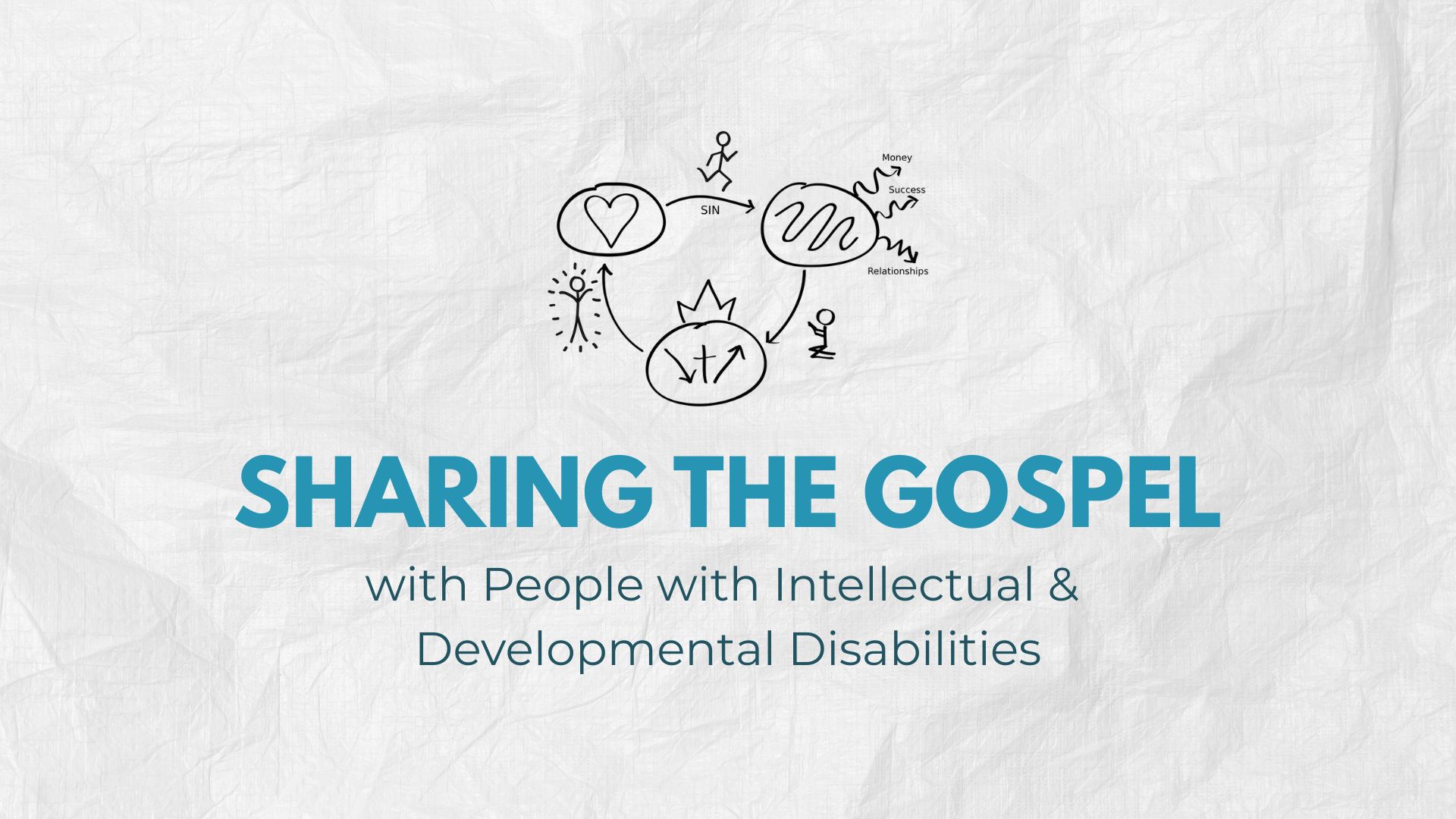
- Three Circles (children’s style) with yes/no/I don’t know prompts so everyone can respond.
Stories of Fruit
A first-grade girl with no biblical background first learned about God, then who Jesus is, and later was baptized—evidence of a journey, not a one-moment push. A sensory-friendly VBS reached many unchurched families, including a Hindu family whose daughters engaged deeply with the “one true God” theme through worship and story.Language and Clarity
Avoid abstract phrases like “ask Jesus into your heart.” Use concrete, biblical language and picture-based supports. Keep explanations short, repeatable, and paired with visuals and action.Practical Takeaways for Ministry Leaders
- Design sensory-aware environments: lower volume when needed, allow movement, provide quiet corners.
- Use visuals and choice boards (yes/no/unsure) during gospel conversations; let everyone communicate.
- Integrate worship often—music and Scripture reading can be regulating and revealing.
- Train buddies and volunteers to presume competence and watch for nonverbal signs of engagement.
- Think journey: follow up gently over weeks and months; celebrate small, Spirit-led steps.
- Move from respite-only to discipleship-focused programming without losing family support.
Mentioned Resources
- Awe & Wonder's Salvation Resource Kit
- Ability Ministry's Becoming a Christian: Baptism Decision Workbook
- The 3 Circles evangelism tool from the North American Mission Board
Click to view full transcript
Sandra: Hi, friends. Thank you for joining us for today's episode of Key Ministry, the podcast. And today I have a special guest, and we are going to talk about sharing the gospel with people with intellectual and developmental disabilities.
Sandra: My friend Tammy Dunkum is here to talk about her experience at her church and how she has led people through a gospel resource that's been really helpful for her church, and just talking about how God moves in the lives of our ministry participants. And so, Tammy, I'm so glad that you are joining us today.
Tammy: Thanks. I'm excited to be here.
Sandra: Alright. Why don't you start off by telling us a little bit about yourself, your church, your position at your church, so we kinda understand where you're coming from and what your experiences are.
Tammy: Sure. Absolutely. So I'm the special needs coordinator at The Heights Baptist Church, here in Chesterfield, Virginia. I handle all things special needs here at The Heights. My primary role is to manage our sensory class for people with high support needs, and we also provide a buddy ministry which gives one-to-one support for individuals with disabilities. And we oftentimes use our youth in the church to help make that happen. So that's what I do.
Sandra: That's great. The name of my church is Heights, and so people sometimes call it The Heights, you know, because there's a neighborhood up in Houston that's The Heights neighborhood. And so I have to remember your church is The Heights, and my church is Heights.
Tammy: Right. Right.
Sandra: So…
Tammy: Oh, that's fun.
Sandra: Well, you know, I have a passion for this topic because I grew up with a sister with Down syndrome, and I remember when she went forward on a Sunday morning and told the pastor that she was ready to accept Christ as her Savior. He led her through some questions. She was baptized.
Sandra: Now, she was 17 or 18, so she was older than I was. You know, I got baptized as a child. I remember she was able to make this decision and have these conversations. And then she passed away a few years ago, but even when she passed away, she left behind just dozens of journals that had prayer requests in them and sermon notes. And so, I mean, I can so clearly see the work of the Holy Spirit in her life—from leading her to that salvation experience and then in her life just as a believer walking that out.
Sandra: Now, I think if we were to have asked her in her forties the same questions they asked her right in that salvation conversation—“What do you believe about God? What do you believe about sin?”—I think her answers would have been the same, you know? But the beauty of that is that the belief that she had was enough then, and it was enough at the end of her life for God to call her to himself. And so this is such a personal conversation. These are family members and people that we love, and it's so important as parents and as ministry leaders to be faithful to this calling to share the gospel with people with intellectual and developmental disabilities.
Sandra: So let's start by talking about the importance of sharing the gospel with people with disabilities. Like, why do we as ministry leaders feel like that's important, and what beliefs or what verses kind of influence what we believe on that?
Tammy: Sure. I mean, well, sharing the gospel to all peoples is a commandment. We are called to go and tell regardless—regardless of someone's cognitive ability. It's important as image-bearers that people with disabilities have the ability to have a relationship with their Creator and understand who Jesus is.
Tammy: And even though sometimes we can't determine if a person can process their concept of sin

